World's first large scale contactless travel implementation following IATA's One ID expected to reach 20M passengers in 2027
Timeline
Feb 2025 – Mar 2026
Platform
iOS & Android App
My role
Design, Product
Background
Global aviation is moving towards a single direction: the decoupling of passenger capacity from physical infrastructure. With passenger numbers expected to double by 2041, airports face a strong scalability problem. IATA’s One ID initiative to allow passengers be "Ready to Fly" before they arrive at the airport aims to solve this. Passengers securely share their travel documents in advance, and can then breeze through airport touchpoints using just their face.
Following a successful 2024 Proof of Concept, Hong Kong International Airport (HKIA) trusted Neoke to provide the world's first large scale implementation of contactless travel following IATA's One ID standards. Working closely with NEC and the Airport Authority, Neoke is set to deliver a compliant contactless travel experience by April 2026 powered by digital wallets and verifiable credentials. The initiative is expected to reach 20 million passengers in 2027.
The challenge: solve the "re-scan" friction
HKIA already offers a contactless departure experience which enables passengers to pass through various departure checkpoints using just their face.
The problem
Due to privacy regulations, the system can only store personal data (PII) for a limited amount of time. This makes passengers having to scan and share their travel documents each time they travel.
The shift
This is where Neoke's digital wallets and verifiable credentials come in: to empower passengers to securely store their travel documents on their device once and reuse them on each trip. Moving to a decentralized model makes the document sharing secure and compliant with privacy regulations while removing the repetitive document scanning.
How does success look like?
Targets for Hong Kong Airport
Reduce bag drop speed from ~3mins to <1min
Increase biometric identification of departing passengers by 3% in 2026
Success metric for Neoke
No of active wallets (wallet used at least once per year)
Role and responsibilities
I led the Experience Design and Product Strategy, keeping the balance between complex technical and security constraints, and the need for a seamless passenger experience. Our team at Neoke consisted of Estrella who led the technical coordination and implementation, while Nijat developed the app experience. Eric from NEC handled the project management of the overall initiative.
Other teams involved
Hong Kong Airport (Airport Authority, Infra, Security, Mobile app)
NEC (Digital Identity Team, Identity Verification Team)
Accenture (Hong Kong Airport contractor for integrating the solution to the Hong Kong Airport mobile app)
Passenger flows
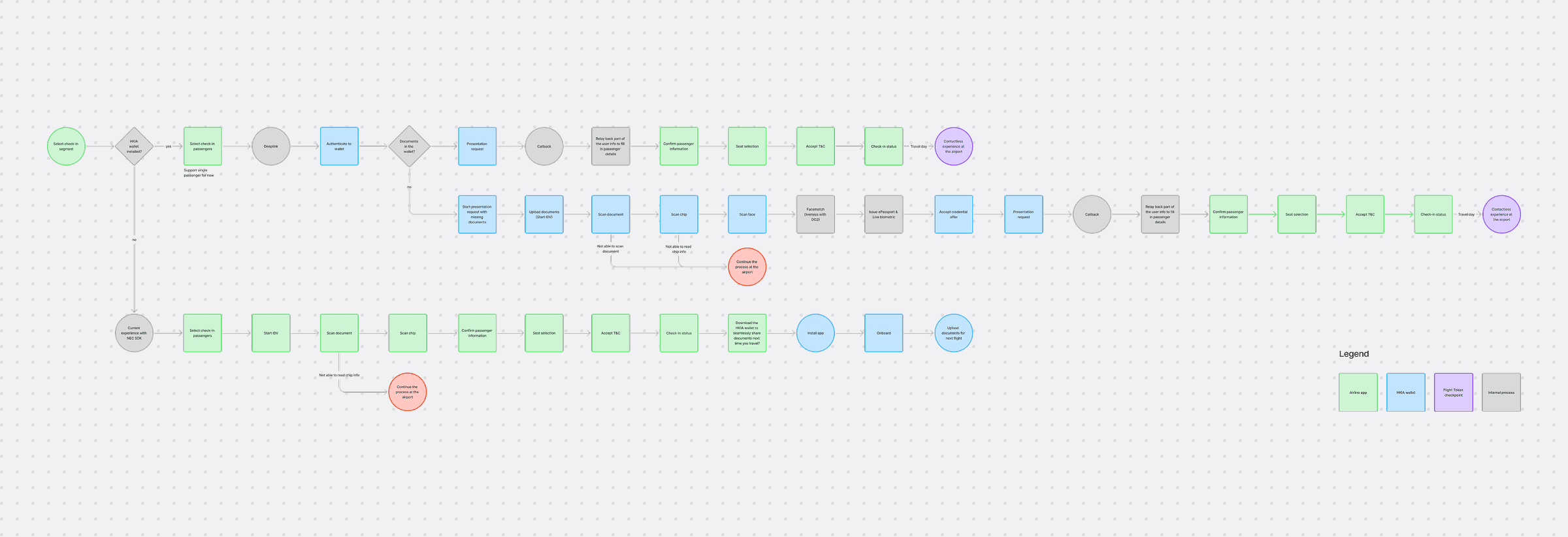
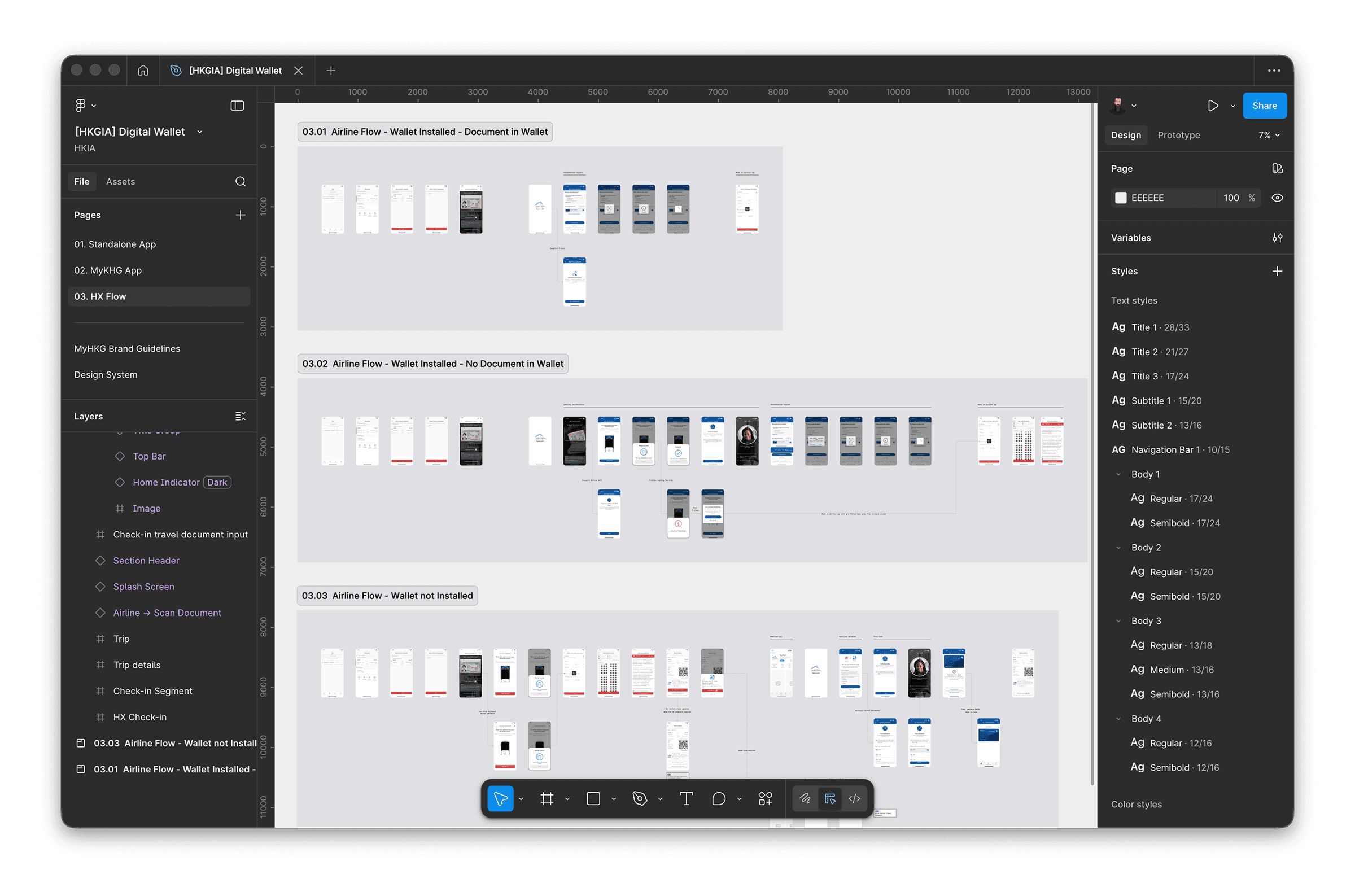
The expected main entry point is not the Hong Kong Airport wallet, but the participating airlines. Participating airlines for now are the ones native to Hong Kong, in particular Hong Kong Air, Hong Kong Express and Cathay Pacific. Part of the project has been to integrate with them. Here is the full flow of the check-in experience. Main flows
User has the Hong Kong Airport app installed and have already uploaded their travel document
User has the Hong Kong Airport app installed, but have no uploaded travel documents. They'll be asked to import
User hasn't installed the Hong Ko
Add travel document from within the digital wallet
Add a travel document to the My HKG from the participating airline apps, when the My HKG app is installed in the traveler device. We add a bottom sheet to advertise that travelers can store their travel document once and reuse it each trip. We're adding this at the end of the check-in process so as to not hurt conversion.
Retrieve travel document from airline app
Core experience of the Neoke digital wallet
Adaptation
The existing Neoke digital wallet has been the basis of our discussion with the Hong Kong Airport team. Below is the core experience.
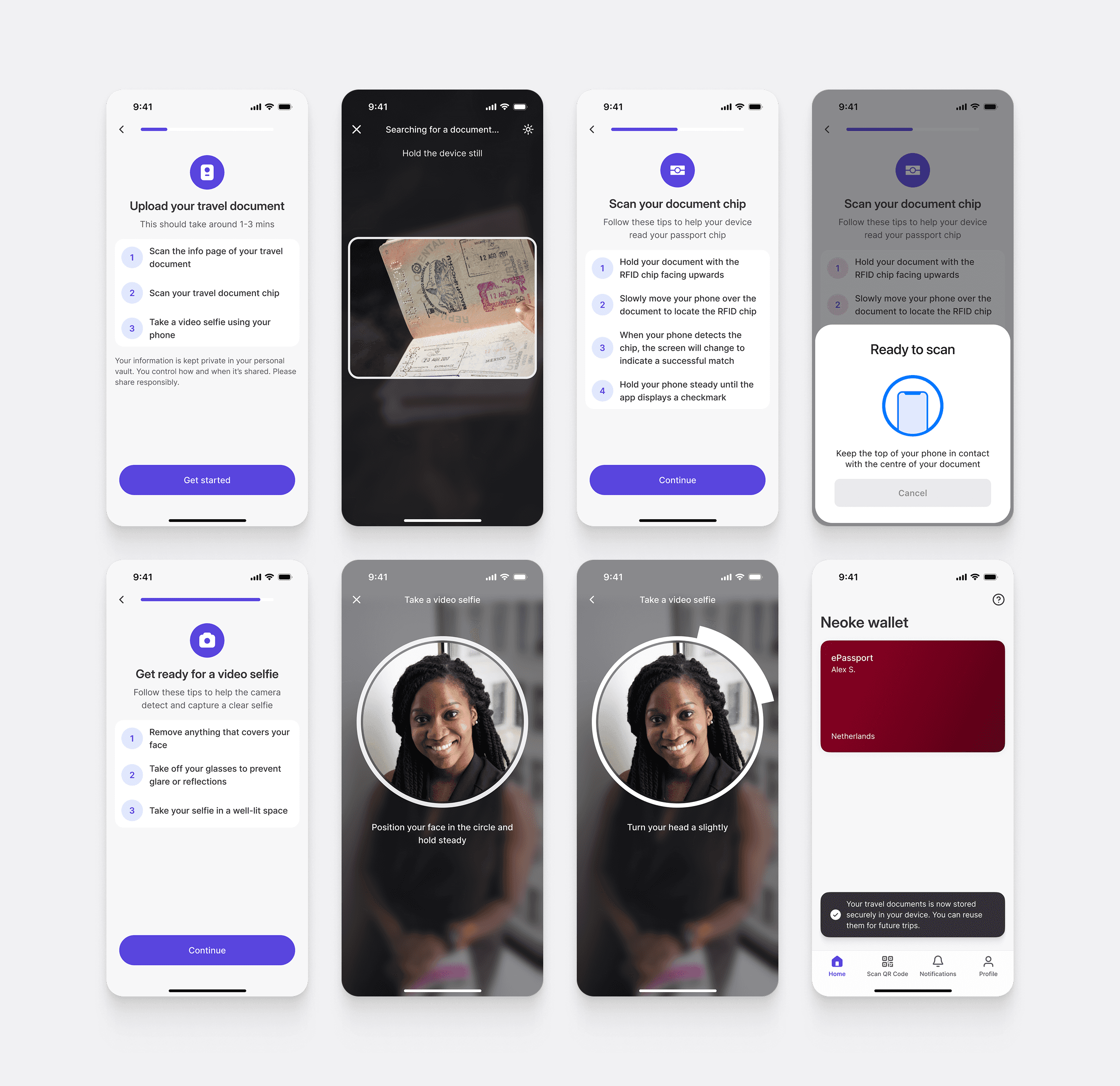
Upload travel document (KYC)
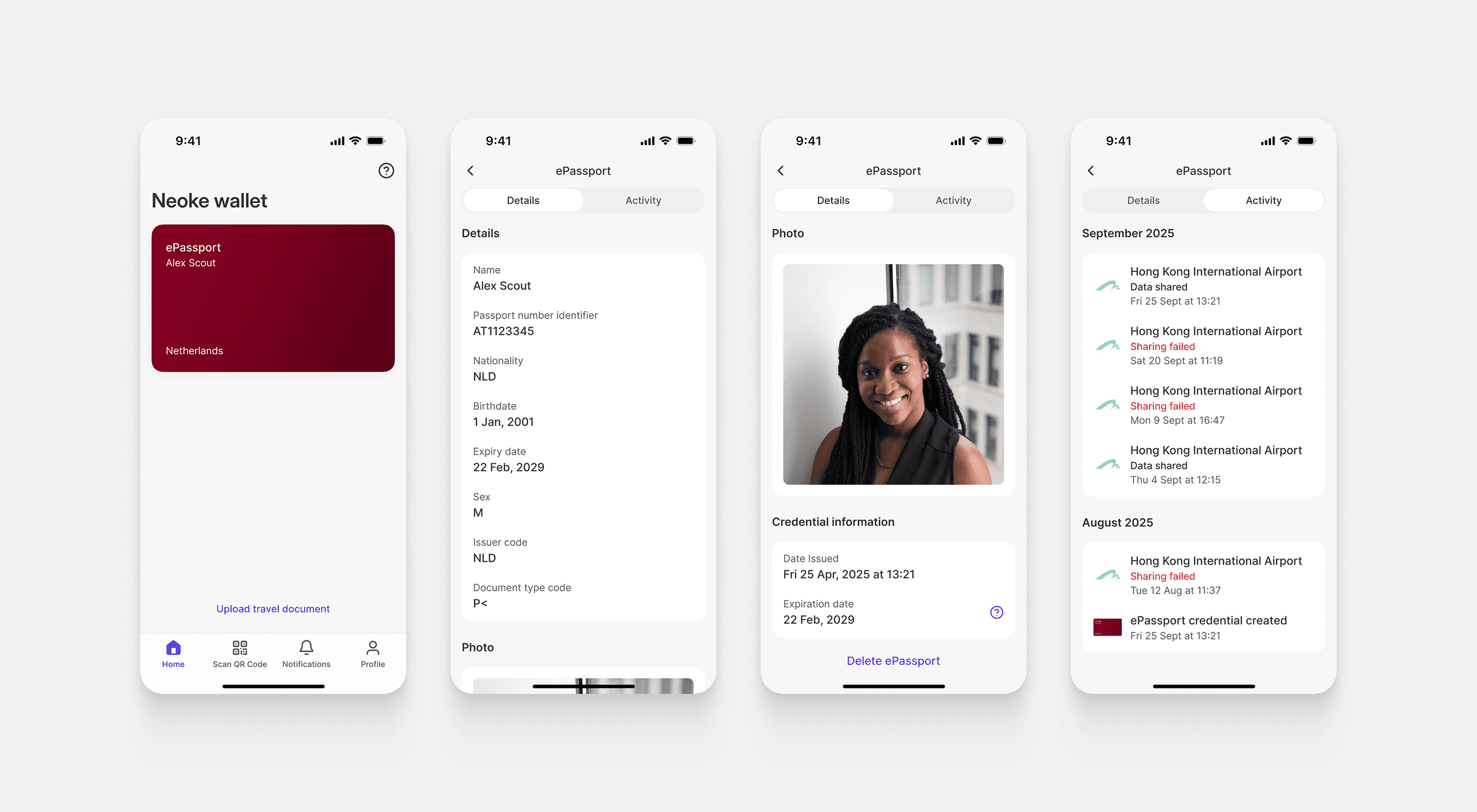
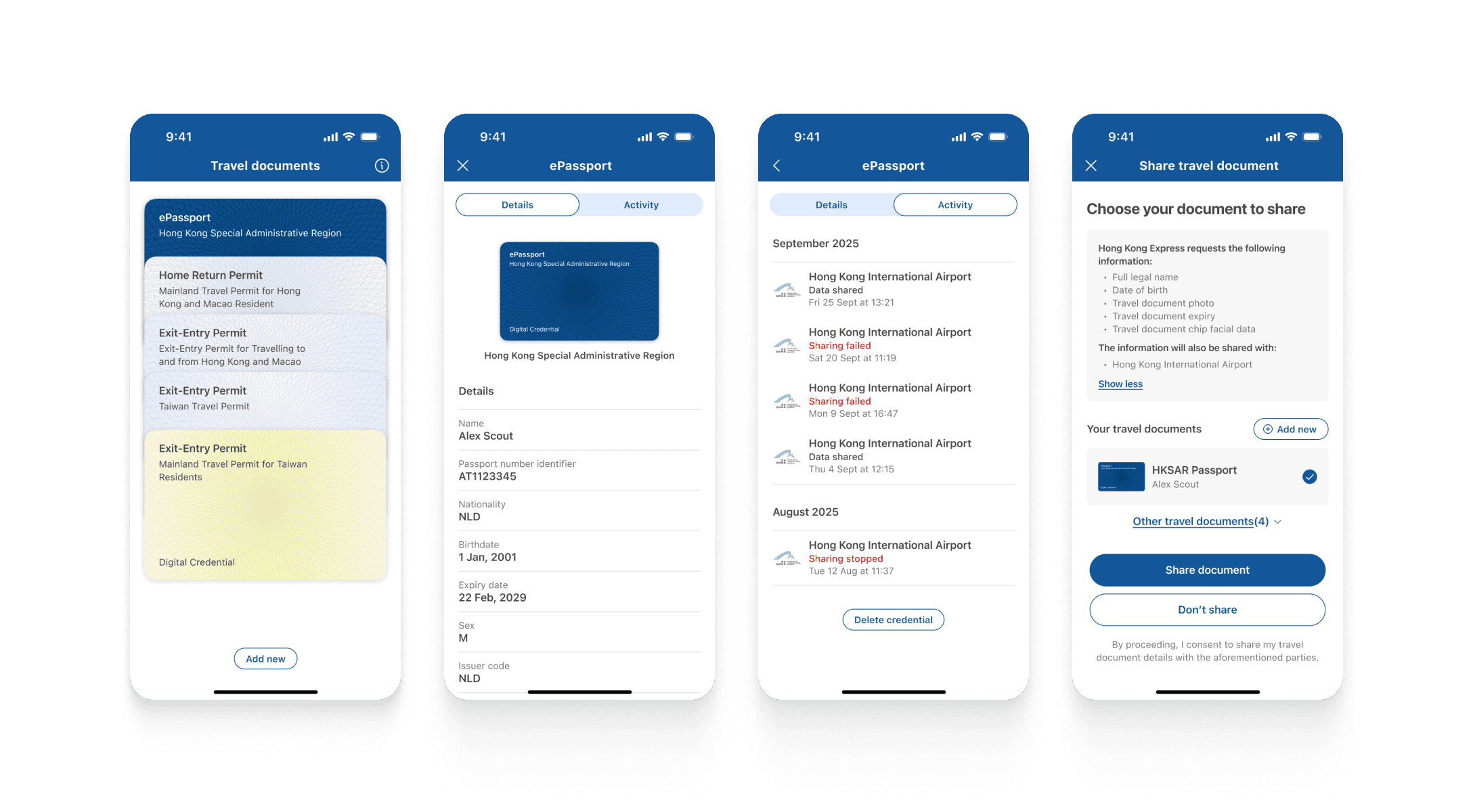
Travel document details and sharing activity
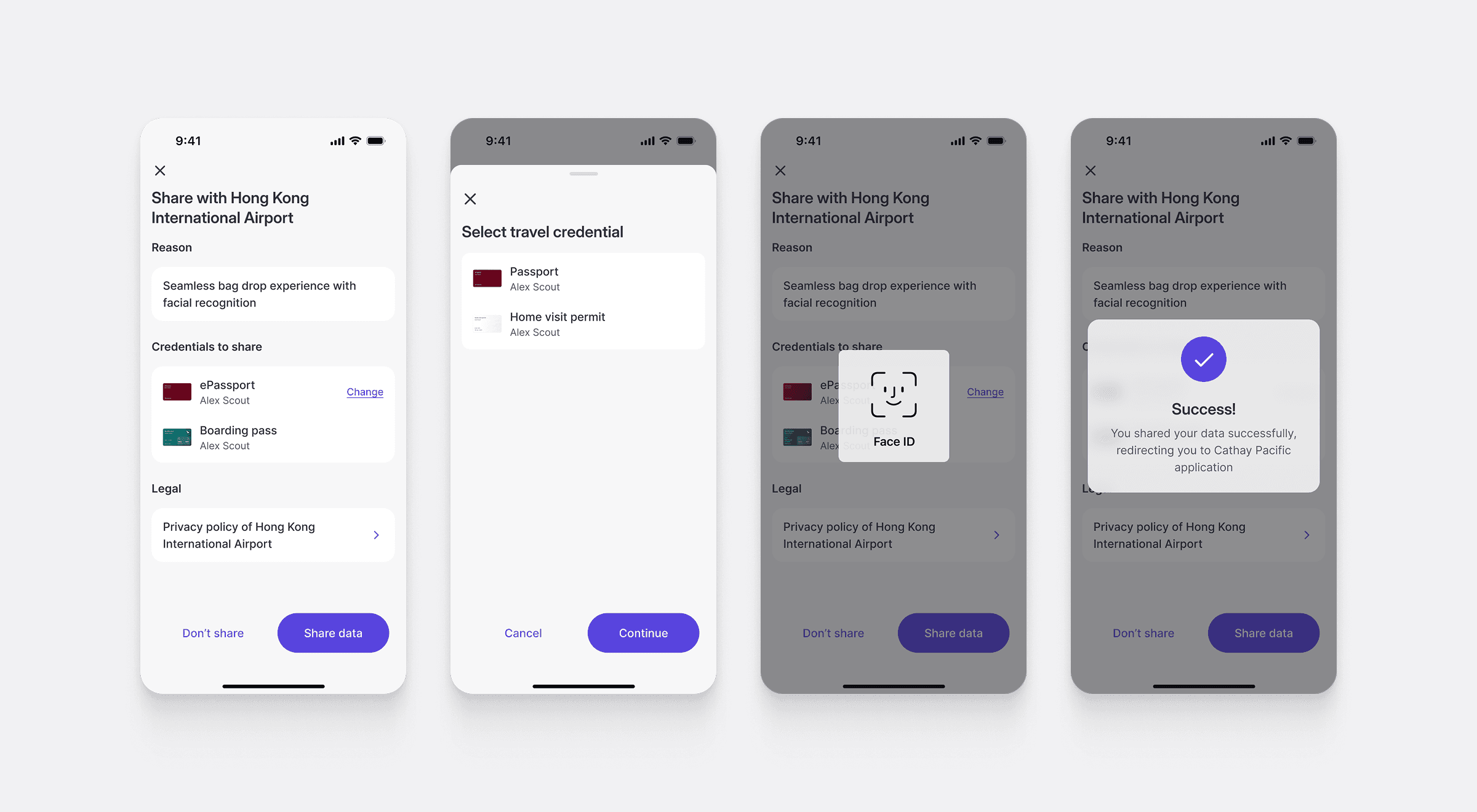
Share travel documents
Internal testing and feedback
The existing Neoke digital wallet has been the basis of our discussion with the Hong Kong Airport team. They have been familiar with the experience in our collaboration for the IATA POC the previous year.
Caption
Adapt the wallet to the MyHKG app visual language
The existing Neoke digital wallet has been the basis of our discussion with the Hong Kong Airport team. They have been familiar with the experience in our collaboration for the IATA POC the previous year.
Caption
Add travel document
Travel documents can be added to the digital wallet in two ways. From within the My HKG app or they can be retrieved from the participating Airlines app.
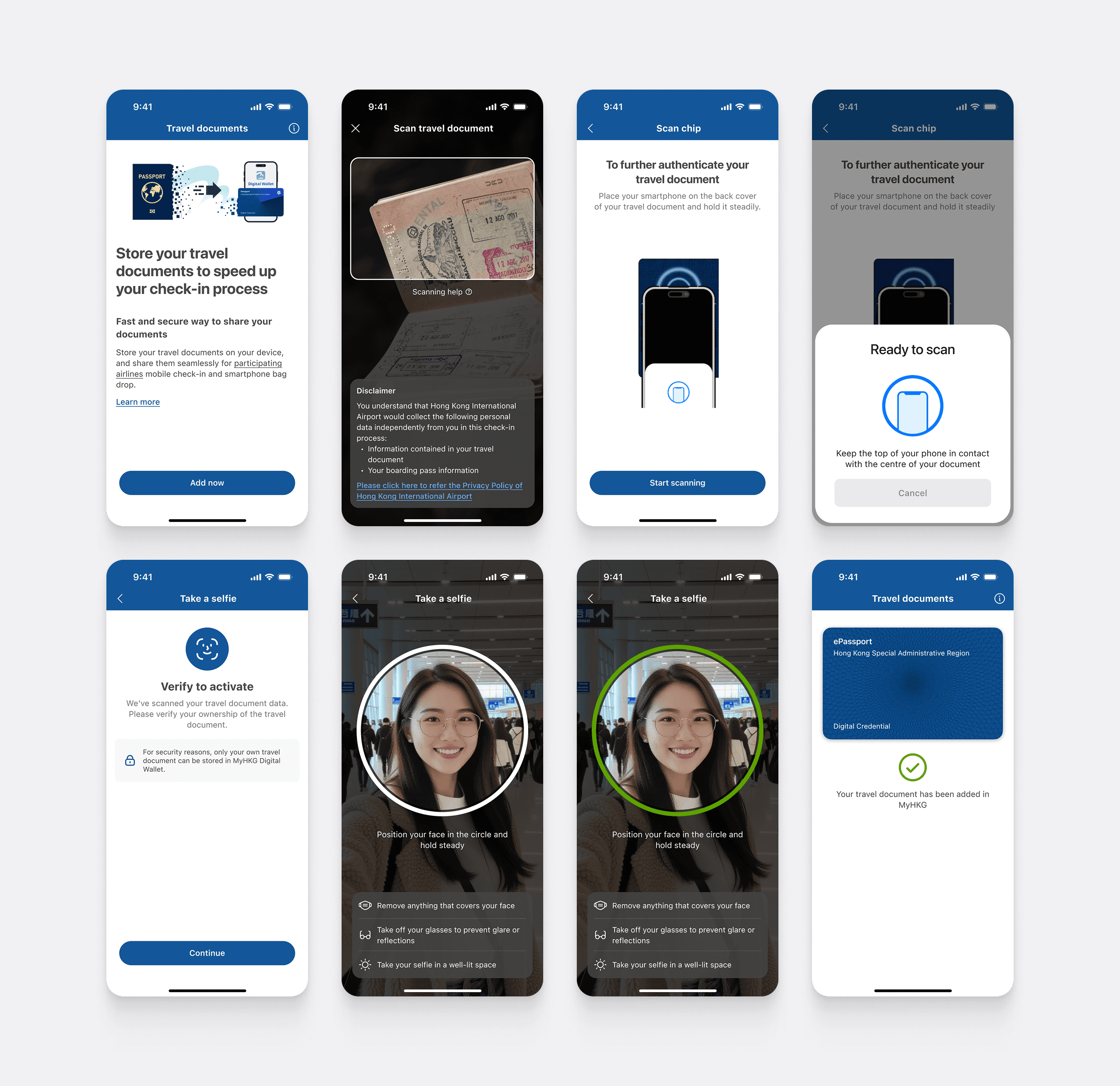
Add travel document from within the My HKG wallet
Add a travel document to the My HKG from the participating airline apps, when the My HKG app is installed in the traveler device. We add a bottom sheet to advertise that travelers can store their travel document once and reuse it each trip. We're adding this at the end of the check-in process so as to not hurt conversion.
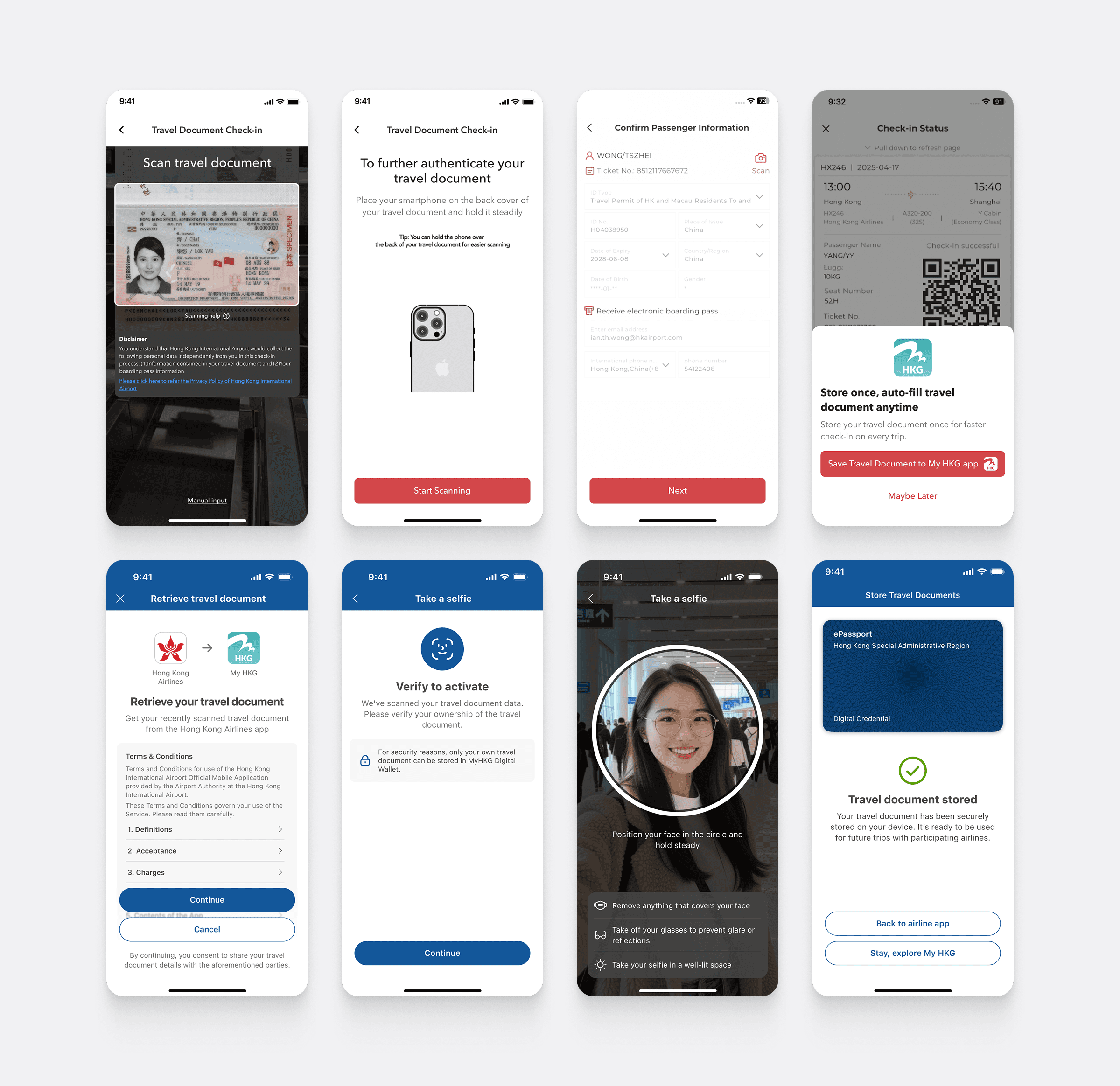
Retrieve travel document from airline app
Deliverables
Standalone wallet app for testing based on the Neoke wallet
SDK with pre-built user interface, to be integrated in the myHKG app
Design adaptations to participating Airlines mobile app (Hong Kong Airlines, Hong Kong Express, Cathay Pacific)
How digital wallets work
Digital wallets act as a secure, decentralized vault for travelers' official documents. By storing tamper-proof Verifiable Credentials locally on their smartphone, they can navigate airport checkpoints using biometric authentication as a unique, secure identifier. Unlike traditional systems that rely on centralized databases, this model ensures that travel documents remain under the traveler’s control, reducing the risk of data breaches and streamlining the boarding process.
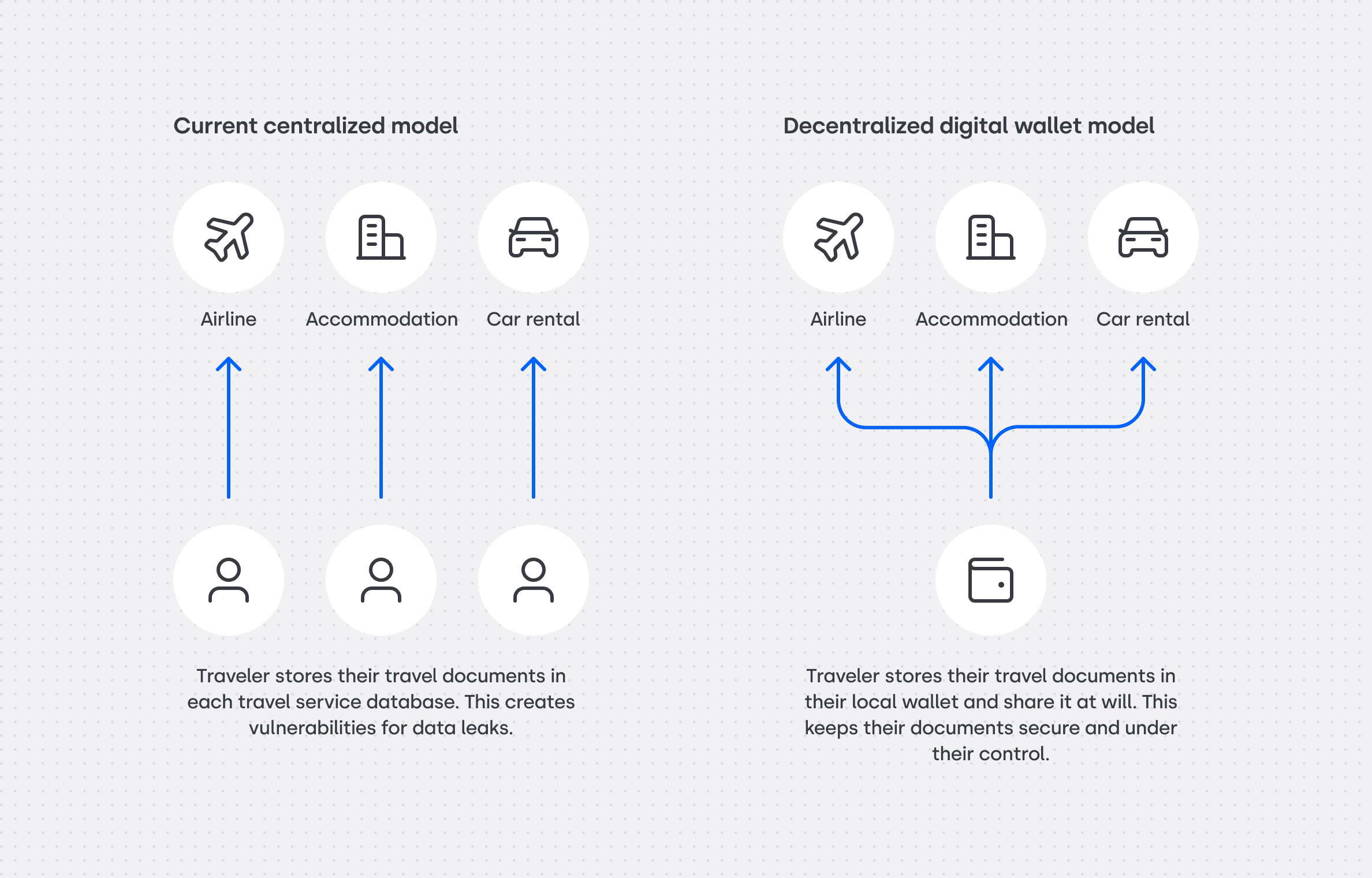
Current vs. digital wallet model of travel document sharing
For the Hong Kong Airport implementation, the high level flow is presented below.
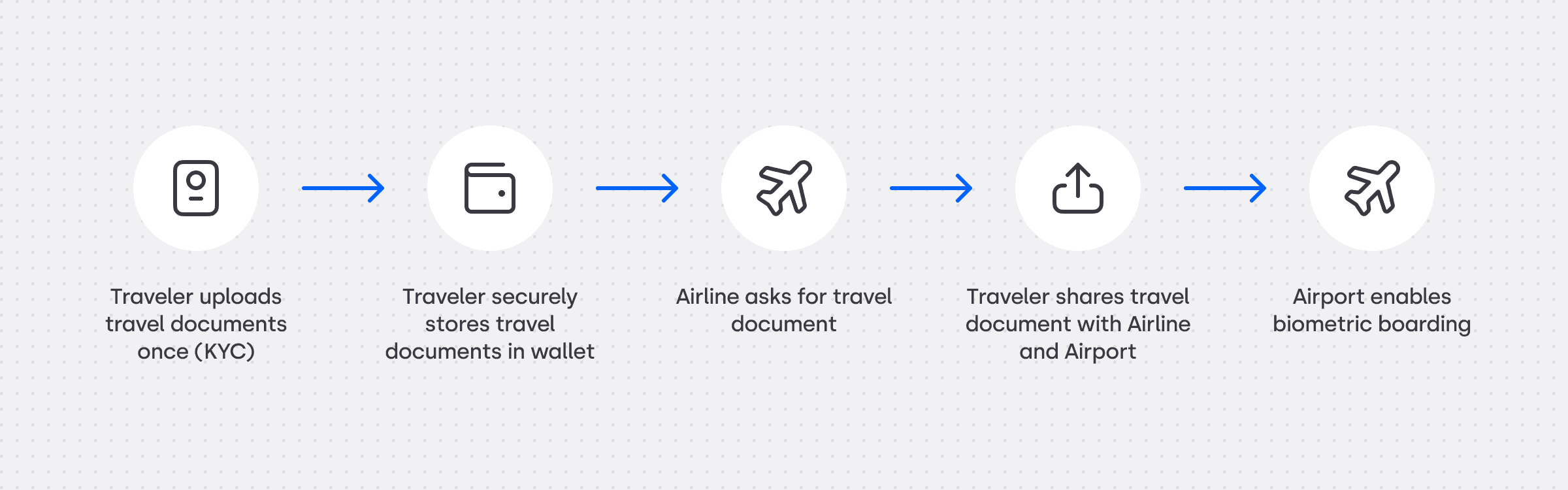
High level flow of document sharing to enable a contactless experience at the airport
The connection between the requesting service and the digital wallet is established via QR codes for web interfaces or deeplinks for mobile applications. In this implementation, the airline app initiates a request to share or save a document, triggering a deeplink that opens the digital wallet with an encrypted request. Once the traveler authorizes the transaction, a second deeplink facilitates a seamless app switch back to the airline app to finalize the journey.
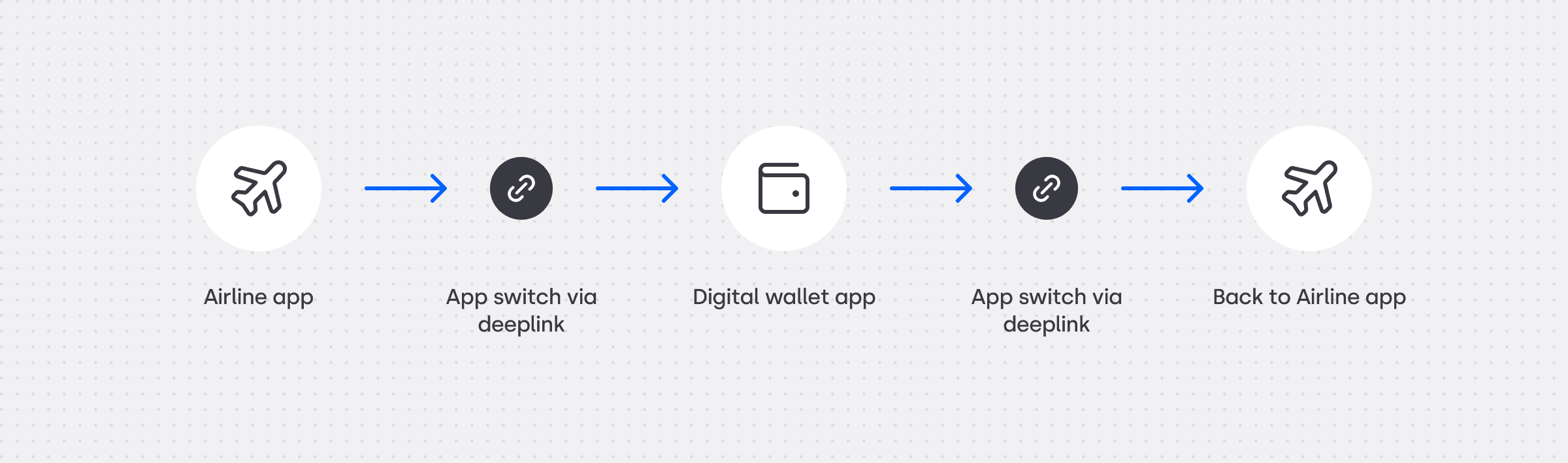
Document sharing via deeplinks